What Is Capsular Contracture? Symptoms, Stages, and Treatment
Breast augmentation is often a journey toward feeling more confident and comfortable in your own skin. But when something doesn’t feel quite right afterward, like unusual firmness, tightness, or a change in shape, it can be both confusing and concerning. One such condition that some patients may experience is capsular contracture, where the body’s natural healing response becomes a little too aggressive around the implant.
If you’ve ever wondered what is capsular contracture or felt concerned about unusual changes after a capsular contracture breast implant, you’re not alone.
With the right awareness and timely care, this condition can be effectively managed.
Every case at Vivari Aesthetics is handled with accuracy, compassion, and a thorough comprehension of each client’s demands. Restoring comfort, maintaining natural outcomes, and boosting your self-esteem are the main goals of everything from early diagnosis to cutting-edge treatment options.
Understanding the Body’s Response: What is Capsular Contracture?
After a breast implant procedure, your body naturally forms a thin layer of scar tissue around the implant. This is called a capsule, and it’s completely normal.
But occasionally, this capsule becomes overly tight or hard. We refer to this problem as capsular contracture. The implant may feel hard, look warped, or even be uncomfortable as a result.
While mild cases may not require intervention, more advanced stages can affect both comfort and appearance. Hence, early detection is essential.
Why does it happen? (Common causes)
Although the precise cause isn’t always known, a number of factors are known to raise the risk:
- Low-grade bacterial contamination (biofilm formation)
- Bleeding or fluid accumulation after surgery
- Implant rupture or leakage
- Radiation therapy (in reconstructive cases)
- Smoking or poor healing response
- Placement of the implant above the muscle
| Not very uncommon Capsular contracture can occur in approximately 5–10% of breast augmentation cases. |
The Subtle Beginning: Early signs you shouldn’t ignore
Recognizing the early signs of capsular contracture post breast augmentation procedure can make a significant difference in treatment outcomes.
Watch out for the following early signs of capsular contracture:
- Slight firmness in the breast
- A feeling of tightness or pressure
- Mild discomfort when touched
- Subtle change in breast shape or positioning
Early intervention can stop the growth of symptoms, which are generally minor and easy to ignore at this point.
From Mild to Severe: Understanding the Stages
Capsular contracture is typically classified using the Baker scale.
Here’s a clear comparison:
| Stage | Description | Symptoms | Visible Changes |
| Grade I | Normal | Breast feels soft and natural | No visible change |
| Grade II | Mild | Slight firmness | Looks normal |
| Grade III | Moderate | Noticeable firmness, discomfort | Visible distortion |
| Grade IV | Severe | Pain, tightness, hardness | Significant distortion |
As the condition progresses, both physical discomfort and aesthetic concerns become more noticeable.
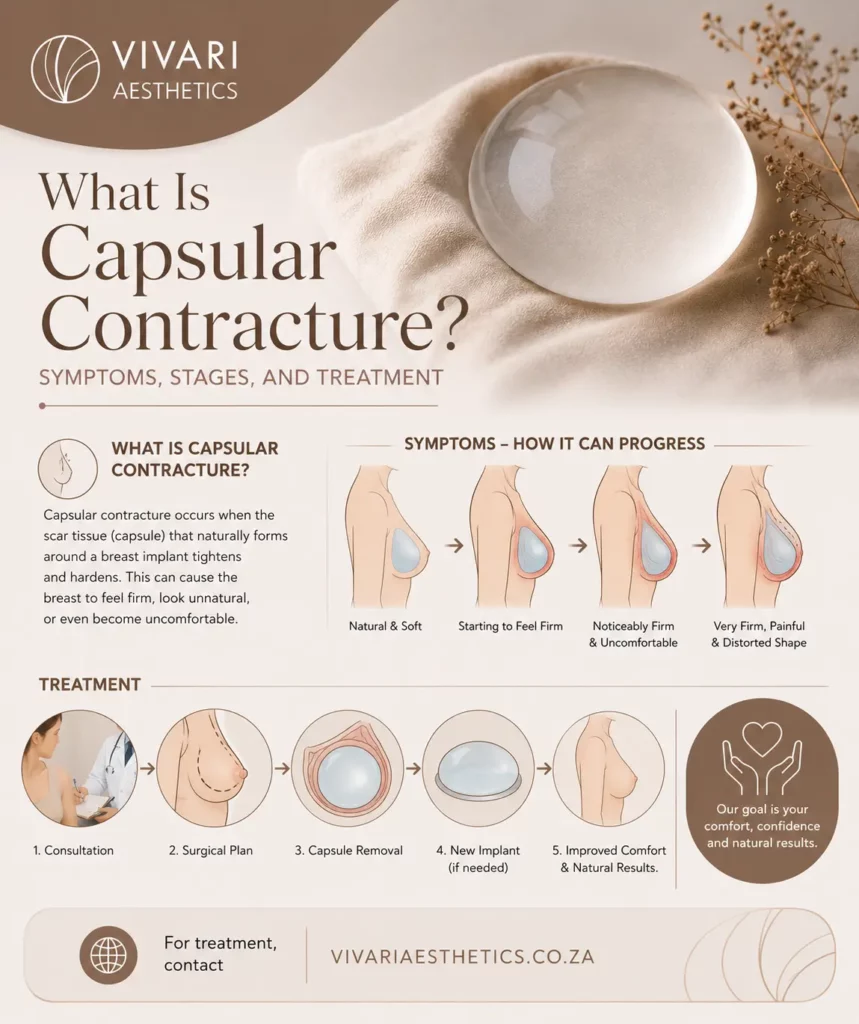
Recognizing the Warning Signs: Symptoms that Need Attention
Understanding capsular contracture symptoms can help you act at the right time.
Common signs of capsular contracture include:
- Hard or tight breasts
- Pain or tenderness
- Implant sitting higher than normal
- Misshapen or uneven breasts
- Reduced softness over time
If you’re asking yourself “Is capsular contracture dangerous?” – the answer is that while it is not life-threatening, it can significantly affect your comfort, confidence, and implant longevity if left untreated.
What happens if you ignore it?
Delaying treatment can lead to:
- Progressive pain and discomfort
- Increasing breast distortion
- Implant displacement
- Higher chances of implant rupture
- More complex surgical correction later
In advanced cases, treatment becomes more invasive, and recovery may take longer. Early intervention always leads to better outcomes.
The Road to Recovery: Capsular Contracture Treatment Options
There are effective ways to manage and treat this condition.
1. Non-surgical approaches (Early stages)
- Medications to reduce inflammation
- Ultrasound therapy
- External massage techniques (guided by specialists)
Lifestyle adjustments to improve healing
2. Minimally invasive treatments
- Closed capsulotomy (rarely used today due to risks) – An older technique where external pressure is applied to break the hardened scar tissue around the implant without surgery.
- Targeted therapies to soften the capsule – Non-surgical treatments aimed at reducing tightness and improving implant softness in early or mild cases.
3. Surgical treatment (Advanced cases)
The goal of surgery is not only to relieve tightness and discomfort but also to restore a softer, more natural breast shape.
The exact surgical approach depends on the severity of the condition, the condition of the implant, and the patient’s aesthetic goals.
Capsulectomy: Removing the tightened scar tissue
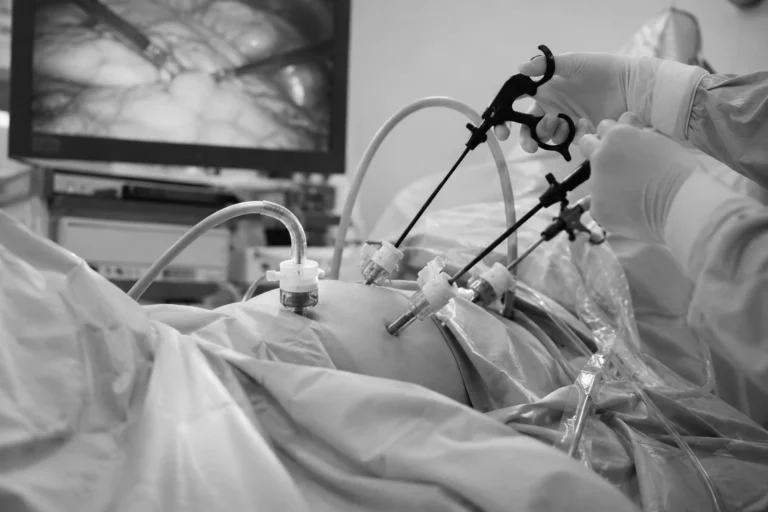
Capsulectomy is one of the most performed procedures as a treatment option for capsular contracture During this procedure, the hardened scar tissue surrounding the implant is carefully removed. This helps release the pressure that has built up around the implant and improves both comfort and appearance.
In many cases, the implant may also be replaced with a new one to reduce the chances of recurrence.
Implant Replacement or Repositioning
Sometimes, the implant itself may need to be changed or repositioned. For example:
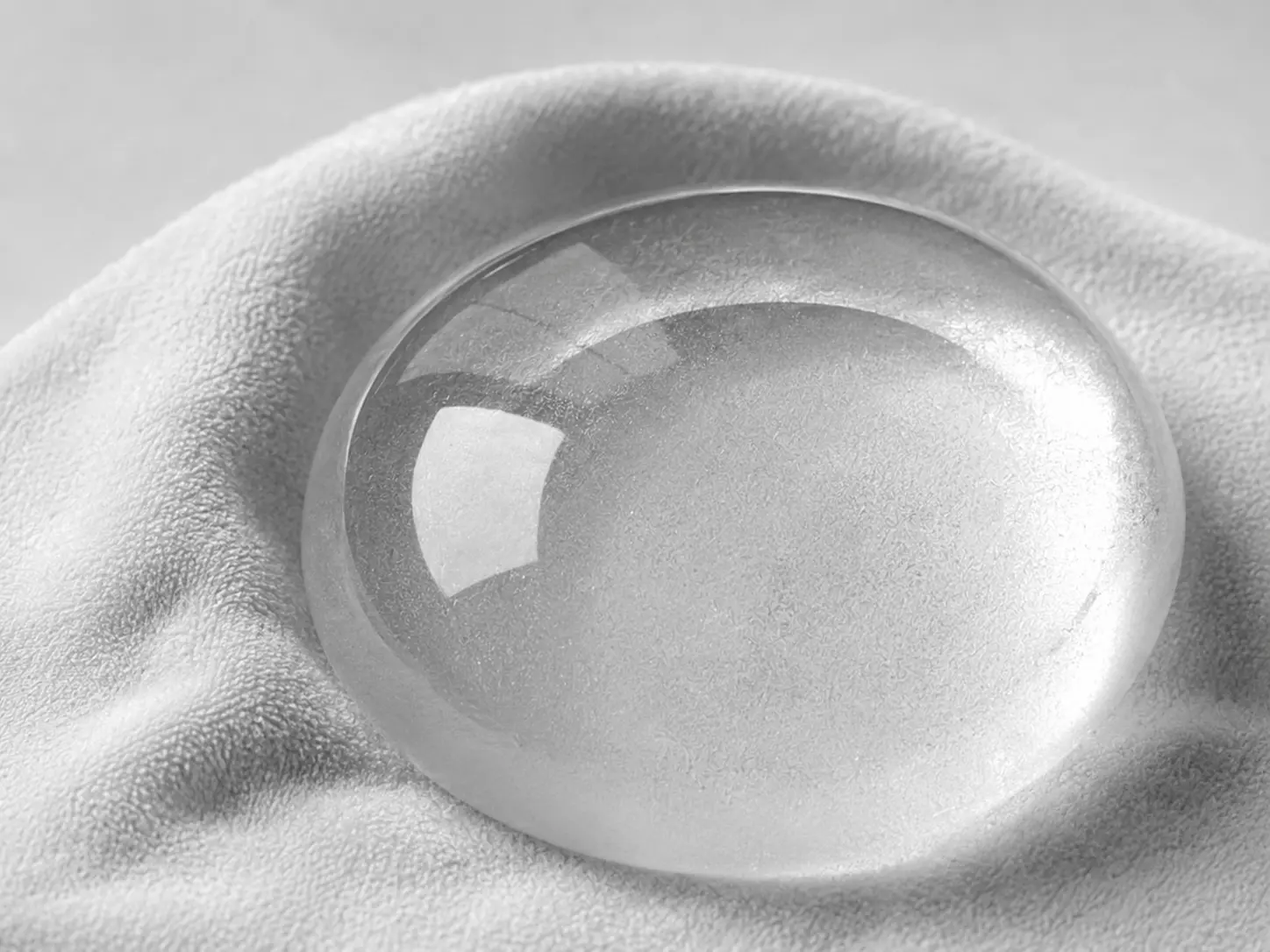
- Older or damaged implants may be replaced with newer-generation implants
- The implant pocket may be adjusted for better support and symmetry
- The implant may be moved beneath the chest muscle if it was previously placed above it
These adjustments can help lower irritation and reduce future scar tissue formation.
En Bloc Removal in Complex Cases
Surgeons may advise an en bloc removal, in which the implant and surrounding capsule are removed as a single unit, in more severe or recurrent situations. When there is persistent inflammation, significant hardness, or implant rupture, this method is frequently taken into consideration.
If you’re wondering how to treat capsular contracture, the approach depends entirely on the stage and severity.
Prevention matters: How to Avoid Capsular Contracture?
While not all cases are preventable, certain steps can reduce the risk:
- Choosing an experienced surgeon
- Following post-operative care instructions strictly
- Maintaining proper hygiene
- Avoiding smoking
- Attending regular follow-ups
- Opting for appropriate implant placement (often under the muscle)
These steps play a crucial role in how to avoid capsular contracture effectively.
The Vivari Aesthetics Approach: Precision Meets Personal Care
At Vivari Aesthetics, managing capsular contracture is not just about treatment; it’s about prevention, early detection, and personalized care.
What sets the approach apart?
- Advanced surgical techniques to minimize scar tissue formation
- Careful implant selection and placement strategies
- Strict sterile protocols to reduce infection risk
- Customized recovery plans tailored to each patient
- Ongoing monitoring to detect early symptoms of capsular contracture
- Minimally invasive correction options whenever possible
A Quick Comparison: Early vs Advanced Treatment
| Factor | Early Stage Management | Advanced Stage Treatment |
| Complexity | Low | High |
| Treatment Type | Non-surgical or minimally invasive | Surgical |
| Recovery Time | Short | Longer |
| Cost | Lower | Higher |
| Outcome | Highly favorable | Depends on severity |
This highlights why recognizing the signs of capsular contracture early is so important.
With Vivari Aesthetics, make an informed choice regarding your Capsular Contracture
Although capsular contracture might be unsettling, it is curable and tolerable with the correct knowledge and prompt attention. The secret is to pay attention to your body, spot even minute changes, and get professional help as soon as possible. Therefore, don’t wait if you’ve experienced any indications of capsular contracture or just want assurance following your treatment.
At Vivari Aesthetics, your comfort, safety, and results are always the priority.
Book a consultation today to understand your condition. Receive care that is tailored specifically to you. Because when it comes to your body, informed decisions lead to the best outcomes.
FAQs
How common is capsular contracture?
It usually affects five to ten percent of women after breast implant surgery.
What are the early signs of capsular contracture?
Mild firmness, slight tightness, and subtle changes in breast shape are often the earliest indicators.
Is capsular contracture dangerous?
It’s not life-threatening, but it can worsen over time and affect both comfort and appearance if untreated.
How is capsular contracture treated?
Treatment ranges from medication and therapy in early stages to surgical removal of scar tissue in advanced cases.
Can capsular contracture go away on its own?
No, it usually does not resolve without treatment and may gradually worsen.
How can I avoid capsular contracture?
Following post-surgery care, choosing an experienced surgeon, and attending regular check-ups can reduce the risk.
When should I see a doctor?
If you notice firmness, discomfort, or any change in breast shape, it’s best to get evaluated early.