Types of Weight Loss Surgery: What patients need to know
At a glance: Key takeaways
There are several types of weight loss surgery, ranging from traditional procedures like gastric bypass to minimally invasive options like the intragastric balloon.
- The right choice depends on your BMI, health history, and personal goals. There is no one-size-fits-all answer.
- All weight loss surgery options work best when paired with a structured recovery and wellness program.
- Lasting success requires permanent lifestyle changes; surgery is a powerful tool, but not a shortcut.
- Finding the best weight loss surgery for you requires an in-depth clinical consultation tailored to your unique Body Mass Index (BMI), medical history, and personal wellness goals.
If you’ve spent years trying to lose weight through diets, calorie tracking, and exercise but still struggle to see lasting results, you’re not alone.
Obesity is a complex health condition influenced by factors like genetics, hormones, metabolism, and mental health. For many people, lifestyle changes alone may not be enough to achieve long-term weight loss.
Modern weight loss procedures are safer and more personalized than ever before. Whether you are considering surgery or a minimally invasive option, understanding the types of weight loss surgery is the first step toward making the right decision for your health.
Understanding the traditional types of Weight Loss Surgery
Traditional weight loss surgery works through one or more of three mechanisms:
- restriction, i.e., limiting how much food the stomach can hold),
- malabsorption, i.e., reducing how many calories the body absorbs),
- or a combination of both.
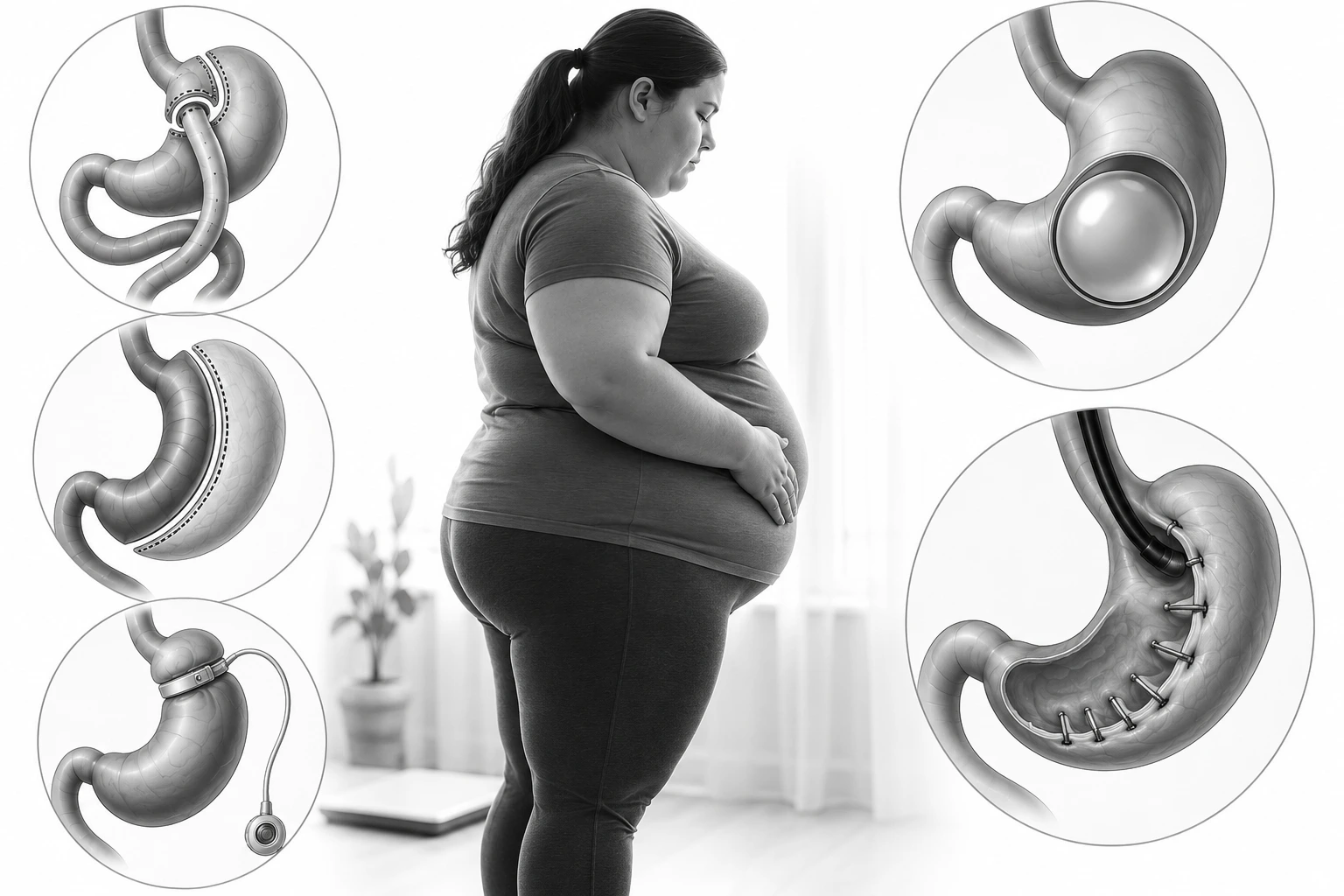
Gastric Bypass (Roux-en-Y)
Often considered a gold standard in bariatric care, the Gastric Bypass reduces stomach capacity and limits calorie absorption.
During the procedure, a small stomach pouch is connected to the middle section of the small intestine, allowing food to bypass most of the stomach and upper intestine.
Because the stomach pouch is much smaller, patients feel full after eating less food. At the same time, changes in digestion can help improve certain obesity-related conditions, including type 2 diabetes, high blood pressure, and sleep apnea.
Sleeve Gastrectomy (Gastric Sleeve)
The gastric sleeve is one of the most widely performed weight loss surgeries today.
During the procedure, around 75–80% of the stomach is removed, leaving a smaller, sleeve-shaped stomach pouch that limits how much food can be eaten.
The procedure also affects hormones involved in hunger regulation (ghrelin), helping patients feel satisfied with smaller meals.
Adjustable Gastric Band
Once a popular weight loss surgery option, the adjustable gastric band has become significantly less common over the past decade.
The procedure places an inflatable silicone band around the upper stomach, creating a smaller pouch that helps control food intake. The band can be adjusted over time through a port under the skin, which is why it is called “adjustable.”

Minimally invasive & non-surgical alternatives
Not everyone is a good candidate for traditional bariatric surgery. Some patients prefer minimally invasive options, while others may not meet the criteria for surgical procedures.
Vivari Aesthetics offers advanced, clinically supported non-surgical weight loss procedures that are changing what’s possible, without a single external incision.
Intragastric Balloon
An intragastric balloon is a temporary non-surgical weight management designed to help patients feel full sooner and eat smaller portions. A soft, saline-filled balloon is placed in the stomach through the mouth using an endoscope, without any incisions.
Once inflated, it takes up space in the stomach to reduce capacity and support portion control. The balloon is usually removed after six months using the same minimally invasive method.
The procedure is best suited for patients looking to jumpstart their weight loss journey, establish healthier eating habits, or lose weight before a more advanced procedure.
Endoscopic Sleeve Gastroplasty (ESG)
Endoscopic sleeve gastroplasty is one of the most exciting developments in non-surgical weight loss. ESG achieves a result similar to a surgical gastric sleeve, reducing the stomach’s functional volume, but entirely from the inside. Using a specialized endoscopic suturing device passed through the mouth, the physician places a series of internal stitches to reshape the stomach into a smaller, sleeve-like structure.
Because there are no external cuts or scars, recovery is typically faster than with traditional bariatric surgery. Most patients return home the same day and resume normal activities within a few days.
ESG has shown promising results, with meaningful weight loss outcomes and a strong safety profile compared to traditional surgery.
How to choose the best Weight Loss Surgery for you?
There is no single best weight loss surgery for everyone. The right procedure depends on your health, lifestyle, and weight loss goals.
During a consultation, your bariatric specialist will assess:
- Your BMI and current weight
- Medical history and previous treatments
- Obesity-related conditions like type 2 diabetes, sleep apnea, or acid reflux
- Lifestyle, eating habits, and weight loss goals
For example, gastric bypass may be considered for patients with conditions, such as severe reflux or diabetes, while minimally invasive options such as ESG may be suitable for those looking for a shorter recovery period.
Weight loss procedures are tools, not quick fixes. Long-term results depend on healthy habits, regular activity, and continued medical support.
A holistic approach to your health
While traditional types of weight loss surgery are effective for many patients, minimally invasive options like the intragastric balloon and Endoscopic Sleeve Gastroplasty (ESG) offer additional choices with shorter recovery times and no external incisions.
Why choose a comprehensive program?
The procedure is only one part of the journey. Long-term success depends on expert guidance, healthy lifestyle changes, and ongoing support
The Vivari Aesthetics surgical recovery program is designed to support healing, recovery, and long-term wellness through a comprehensive approach.
By combining nutrition guidance, recovery support, and lifestyle coaching, the program helps patients develop healthy habits, recover confidently, and maintain their results long term.
If you’re considering weight loss surgery, a consultation with an experienced specialist can help create a safe, realistic treatment plan tailored to your needs.
What is the safest weight loss surgery option?
There is no one-size-fits-all answer. The best option depends on factors such as your overall health, BMI, medical history, and weight loss goals. A bariatric specialist can recommend the procedure that best fits your needs and provides the right balance of safety and results.
What are the different types of weight loss surgery?
The main types of weight loss surgery are gastric bypass, sleeve gastrectomy, and adjustable gastric banding. For those looking for less invasive approaches, options such as the intragastric balloon and Endoscopic Sleeve Gastroplasty (ESG) may also be considered.
What factors affect weight loss results after a procedure?
Weight loss outcomes depend on the type of procedure, individual health factors, and lifestyle changes. Following a balanced diet, engaging in regular exercise, and receiving recommended follow-up care can help support long-term results.
What is the difference between surgical and non-surgical weight loss procedures?
Surgical procedures permanently alter the stomach and require incisions. Non-surgical options, such as the intragastric balloon and Endoscopic Sleeve Gastroplasty (ESG), are performed endoscopically through the mouth, resulting in less downtime and no external scars.
How long does recovery take after weight loss interventions?
Recovery varies depending on the treatment. Minimally invasive procedures often involve shorter recovery times, while surgical options may require more time before resuming daily activities.